
- Buy Crypto
- Markets
 Futures
- Spot
- Copy Trade
- Earn
- More
SocialFi has failed to take off — Here’s what needs to change
By: cryptosheadlines|2025/05/08 00:00:06
0
Share
Airdrop Is Live CaryptosHeadlines Media Has Launched Its Native Token CHT. Airdrop Is Live For Everyone, Claim Instant 5000 CHT Tokens Worth Of $50 USDT. Join the Airdrop at the official website, CryptosHeadlinesToken.com Opinion by: Anurag Arjun, co-founder of Avail On paper, SocialFi is a no-brainer. It promises to shift the balance of power in social media — giving people control over how their content and personal data are used and monetized. It even offers users a stake in the $200+ billion social media advertising market, a pie currently devoured almost entirely by giants like Meta.And yet, SocialFi platforms today feel more like digital ghost towns than the bustling hubs of Web2. Friend.tech, hailed as a breakout star in 2023, peaked at just 80,000 daily active users before falling below 10,000. What’s holding SocialFi back? Why does it seem to be following Friend.tech’s fade into obscurity rather than rising to rival Facebook’s dominance?The harsh reality is that decentralized social networks have largely failed to attract and retain mainstream users despite genuine enthusiasm from Web3 communities. The fundamental promise of user ownership, data portability, and monetization remains compelling — but deep structural issues bottleneck adoption.The technical hurdlesBlockchain infrastructure was never designed for the high-throughput, low-latency demands of social networking. Social media users expect instant results when posting pictures, liking comments, or following new accounts — actions that generate hundreds of millions of transactions daily across platforms like Instagram, TikTok and X.Consider this: Ethereum handles just 15-20 transactions per second (TPS). Even Solana — often touted as a high-performance chain — with ~5,000 TPS falls short. Compare that to TikTok’s 25 million daily video uploads or X’s 500 million daily posts. Adoption becomes impossible when users face 30-second confirmation delays to comment on a post or volatile gas fees ranging from 10 US cents to $50 during network congestion.Web2’s hard-won lessons Meta spends $35 billion annually on research and development to refine its platforms’ addictive simplicity. TikTok’s algorithm, honed through 1 billion hours of daily user engagement, delivers content so frictionless that 47% of users open the app immediately upon waking. The result? Interfaces where the tech disappears behind the experience.By contrast, most SocialFi platforms confront new users with wallet popups, crypto slang, and variable fees. For mainstream users, it’s confusing and intimidating. A 2023 DappRadar study found that 92% of SocialFi users abandon platforms within 30 days. Until SocialFi applications can match the frictionless experience of their Web2 counterparts while delivering unique advantages, adoption will remain limited to crypto natives.The fragmentation problemWeb3’s multichain world has splintered SocialFi into silos. Lens Protocol’s social graph doesn’t integrate with Farcaster. Friend.tech’s monetization tools don’t port over to DeSo. The result? A fractured experience with no network effects.Recent: Avara’s Lens secures $31M for SocialFi-focused L2 blockchainConsider if Gmail users had to pay to email someone on Outlook — and couldn’t bring their contacts or messages with them. That’s today’s SocialFi reality.To solve this, decentralized identity systems like ENS and emerging standards like EAS must power portable, composable social graphs. A user’s content, followers, and reputation should travel with them — benefiting the broader ecosystem, not just one app.Purpose-built infrastructureThe solution to SocialFi’s adoption challenges isn’t incremental improvements to existing models but purpose-built infrastructure explicitly designed for social applications. Just as horizontal scaling revolutionized Web2 infrastructure, modular blockchain architecture that separates concerns like data availability, execution, and settlement creates the foundation for social applications that can scale to billions of users.The shift is already underway. Farcaster moved from Ethereum mainnet to Optimism’s layer 2 stack, prioritizing low-cost social interactions. Lens Protocol is migrating to ZKsync, using zero-knowledge proofs to scale while preserving user privacy. CyberConnect launched Cyber, its own L1 chain optimized for social applications, which now supports faster, cheaper interactions with an embedded social graph.These purpose-built stacks mirror how Web2 scaled — separating data, execution, and storage to handle exponential growth. Web3’s version is modular architecture: rollups for performance, decentralized storage for media, and identity layers like ENS or Lit Protocol.User-centric social networkingWhen built on the proper foundation, SocialFi can finally deliver on its core promise: putting users back at the center of the social networking experience. This means true ownership of identity and content, portable social graphs that work across applications, and fair value distribution to the people who create and curate content.The opportunity extends well beyond fixing what’s broken in Web2 social media. True ownership enables creators to retain control and port audiences across platforms. Programmable money allows TikTok-esque viral trends to include instant revenue splits — imagine a dance challenge where 10% of ad revenue auto-splits among creators.Combining programmable money with social connections, new interaction models become possible — from seamless tipping for quality content to automated revenue sharing for collaborative creation.SocialFi’s early iterations have failed to gain meaningful traction beyond crypto enthusiasts. If we finally address the fundamental technical and user experience barriers, Web3 Social can deliver a disproportionate advantage over established platforms only Web3 can offer.Opinion by: Anurag Arjun, co-founder of Avail. This article is for general information purposes and is not intended to be and should not be taken as legal or investment advice. The views, thoughts, and opinions expressed here are the author’s alone and do not necessarily reflect or represent the views and opinions of Cointelegraph.Source link
You may also like

Who is the true winner of the "Tokenization" narrative?
Virtually everyone benefits, but the reason for the benefit, the timing, and the underlying logic are completely different.

Moss: The Era of AI-Traded by Anyone | Project Introduction
AI Trading Agent is rapidly growing its infrastructure.

Chip Smuggling Case Exposes Regulatory Loophole | Rewire News Evening Update
AI chips have become a strategic asset more sensitive than missiles

How a Structured AI Crypto Trading Bot Won at the WEEX Hackathon
Ritmex demonstrates how disciplined risk control and structured signals can make an AI crypto trading bot more stable and reliable on WEEX, highlighting the importance of combining execution discipline with scalable AI trading systems.

Old Indicator Fails, Three Major New Signals Emerge: BTC True Bottom May Still Be Below $60K
When the grocery shopping auntie on the subway, or Tony the hairdresser, start asking you about BTC, crypto, and cryptocurrency investments, selling immediately will be the only best option.

Meeting OpenClaw Founder at a Hackathon: What Else Can Lobsters Do?
Imperial College London MetaGame: AI Agent × Web3 Landing Three Major Directions.

Huang Renxun's Latest Podcast Transcript: NVIDIA's Future, Embodied Intelligence and Agent Development, Soaring Demand for Inferencing, and AI's PR Crisis
The future of competition is not only about whose model is bigger, whose computing power is stronger, but also about who understands the industry better, who can more deeply integrate AI into real processes, and who can organize these capabilities into a set of executable, scalable systems
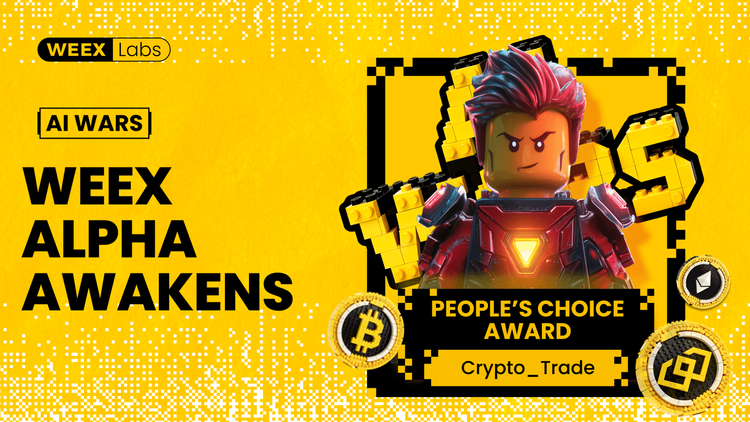
How a Structured AI Crypto Trading Bot Won at the WEEX Hackathon
Crypto_Trade shows how structured inputs and controlled adaptability can build a more stable and reliable AI crypto trading bot within the WEEX AI Trading Hackathon, highlighting a practical path toward scalable AI trading systems.

AI Starts to Devour the Manufacturing Industry | Rewire News Morning Edition
When Bezos starts using AI to buy factories instead of building data centers, it shows that he believes the next wave of AI's value is not inside the box.

When Scaling Meets Speed, Ethereum Foundation Introduces "Hardness" to Safeguard the Base Layer
Hardness is a protocol-level commitment to Ethereum core properties, including censorship resistance, privacy, security, and permissionlessness.
Google, Circle, Stripe Flock Together to Let AI Spend Money: Payment Giants' Joys and Worries in 2026 Q1
The real enemy is no longer each other, but zero cost itself

$100 Billion Factory Purchase: Bezos and Middle Eastern Capital Shift AI Money from Cloud to Shop Floor
Bezos doesn't invest in a new model; he invests in a supply chain.

Xiaomi and MiniMax both unleash their ultimate moves, signaling the start of the Agent Pricing War.
No brand, no marketing, let developers vote with their feet in 8 days

Predicting markets has taken the spotlight, but the Perp DEX has been quietly waging war on traditional exchanges.
During a weekend of relentless volatility, while traditional financial markets were closed, another wave of investors was busy trading gold, oil, and silver on a blockchain platform.

Is the Market Slump Still Making Millions a Day? Is pump.fun's Revenue Real?
If it's really that profitable, what's keeping $PUMP's price down?
Understanding x402 and MPP in One Article: The Two Paths of Agent Payments
x402 for in-protocol payments, MPP for off-chain payments

Quick Look at the Latest 18 Graduation Projects from Alliance: Who's the Next Pump.fun?
The project's core innovation areas include stablecoin payments, AI applications, prediction markets, and RWA tokenization.

It's not just the prediction market that profits from the Iraq War
Always maintaining the ambiguity of regulation with "offshore" may be the consensus of the perp DEX.
Who is the true winner of the "Tokenization" narrative?
Virtually everyone benefits, but the reason for the benefit, the timing, and the underlying logic are completely different.
Moss: The Era of AI-Traded by Anyone | Project Introduction
AI Trading Agent is rapidly growing its infrastructure.
Chip Smuggling Case Exposes Regulatory Loophole | Rewire News Evening Update
AI chips have become a strategic asset more sensitive than missiles
How a Structured AI Crypto Trading Bot Won at the WEEX Hackathon
Ritmex demonstrates how disciplined risk control and structured signals can make an AI crypto trading bot more stable and reliable on WEEX, highlighting the importance of combining execution discipline with scalable AI trading systems.
Old Indicator Fails, Three Major New Signals Emerge: BTC True Bottom May Still Be Below $60K
When the grocery shopping auntie on the subway, or Tony the hairdresser, start asking you about BTC, crypto, and cryptocurrency investments, selling immediately will be the only best option.
Meeting OpenClaw Founder at a Hackathon: What Else Can Lobsters Do?
Imperial College London MetaGame: AI Agent × Web3 Landing Three Major Directions.


 App
App