
- Buy Crypto
- Markets
 Futures
- Spot
- Copy Trade
 Earn
Earn- More
Solana's "Troubles at Home and Threats from Afar": BSC Faces External Criticism, Pump.fun and Raydium Engage in Internal "Food Fight"

Original Title: "When BSC Declares War on Solana, Pump.fun and Raydium Have Begun a Civil War"
Original Source: DeepTech TechFlow
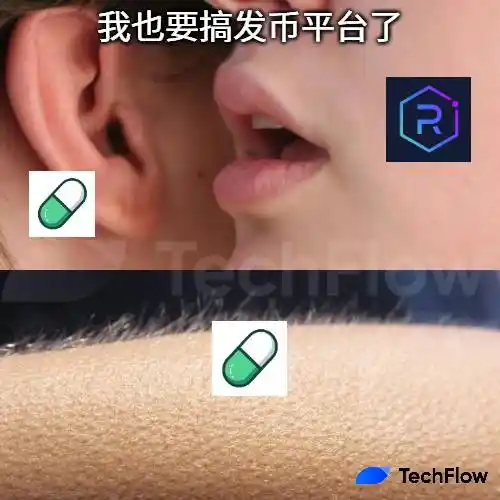
"What tweet did CZ post today?"
If you are asking this question, then obviously BSC has been one of the few recent hotspots on-chain.
With CZ and the top female influencer becoming increasingly active on Twitter, the play of attracting attention and creating memes has gradually emerged; at the same time, leveraging the strong secondary traffic capability of the Binance APP, directly integrating Binance Alpha into the app has also brought more heat to meme trading.
In the overall downtrend of the market, BSC has a taste of coming from behind, and what it is seizing is clearly the on-chain heat that Solana had before.
Traffic and fee income are the anxiety and desire of every chain.
Under business anxiety, there will inevitably be competition between different chains, but in fact, different protocols on the same chain are also competing.
For example, Pump.fun and Raydium each launched a "copycat" of each other.
Pump.fun Does AMM
More than 20 days ago, Pump.fun started doing what Raydium does, launching its own AMM pool, attempting to divert the liquidity revenue originally belonging to Raydium.
(See "Pump.fun Doing Its Own AMM Pool? The Heart of Snatching Raydium's Profit is Exposed")
Since users' trades are first matched within Pump.fun's internal pool, relying on the platform's liquidity to complete the transactions; when the internal pool is filled, the trades are routed to the external pool, which actually relies on Raydium's liquidity pool.
In this mode, Pump.fun has always been Raydium's "liquidity provider," but is also therefore subject to Raydium's rules. Whenever a trade flows to the external pool, Pump.fun needs to pay a portion of the transaction fee, and this part of the profit ultimately flows to Raydium's liquidity providers (LPs), with each transaction on Raydium currently charging a 0.25% fee.
The motivation behind this is quite simple: In plain terms, it's because Pump.fun as a traffic entry point didn't fully capitalize on the benefits brought by the traffic.
At that time, we mentioned that in an unfavorable overall environment, not only were the "leeks" engaging in PvP, but projects were also seizing the opportunity to compete against each other.
Raydium Launching a Launchpad
And today, Raydium's counterattack strategy has also come to light.
According to Blockworks' report, Raydium is launching a token launchpad called LaunchLab, similar to a direct fork of pump.fun.
Although Raydium's official announcement did not directly mention this new change, where there's smoke, there's fire. This seems to imply that the tacit cooperation between Raydium and Pump.fun is gradually being broken.
As observers, this perception is quite obvious --- if you've encroached on my territory, then I can also encroach on yours.
Raydium's motivation is also very simple: as a liquidity pool backend, why not take a step forward and capture the frontend traffic as well?
But the prerequisite for encroachment is to have strength.
For token launchpads like Pump.fun, replicating a similar yet relatively simple product, strength might not necessarily come from technology but rather from funding.
The report further indicates that Raydium still has around $168 million on its balance sheet, giving it the greatest confidence to clone Pump.fun, i.e., to invest people and money.
Furthermore, Blockworks' interview with an anonymous Raydium core contributor indirectly confirms this:
"The protocol started developing LaunchLab several months ago but put the project on hold because it 'didn't want to make the team feel like Raydium was competing with them directly.' Generosity seems to have dried up since the AMM plans for pump.fun emerged."
In other words, while Pump.fun was working on its AMM, Raydium was already considering launching a launchpad.
This feels more like an unintentional competition, and a conscious effort to take the business further.
The project team is obviously more aware than the casual users that transactions are the soul of the crypto business, and it is easier to benefit from various aspects around transactions.
Of course, it would be best to have the ability to take a bite out of the entire process, from the front end to the back end.
Civil War Moat
The essence of the AMM pool is an open-source design, and launching a meme coin is not difficult either; since there are no development barriers on either side, Pump.fun and Raydium could have been doing their own businesses;
The only question is, where are the moats on both sides, and how can they win?
Pump.fun's moat is obviously the traffic advantage brought by user habits. As a Meme coin launch platform, Pump.fun has firmly grasped the attention of some users through its unique community culture and user stickiness.
Once this user habit is formed, it is difficult to easily transfer to another platform. More importantly, Pump.fun's user ecosystem itself has a traffic entry attribute, providing it with sustained growth momentum.
On the other hand, Raydium's moat is built on the transaction demand of its liquidity pools. As one of the most important DeFi infrastructures on Solana, Raydium's ecosystem control comes not only from its deep liquidity pools but also from its transaction network position across the entire Solana chain.
In other words, Raydium's advantage is not just technical but the entire ecosystem's reliance on it.
However, the strength of moats is not a static existence.
In the current environment, Pump.fun and Raydium's moats face different challenges:
Whether Pump.fun's traffic can continue to grow depends on its ability to continuously launch new features and gameplay to attract users. Meanwhile, Raydium needs to maintain its lead in liquidity competition and further consolidate its ecosystem position through financial and technological investments.
Liquidity Depletion: How Many Will Engage in This Civil War?
While the two protocols are busy competing with each other, a bigger question arises:
How many users will actually participate in this civil war? Is there really enough market space and user base to support it?
From the current market environment, it can be seen that the overall cryptocurrency industry is in a downturn, with liquidity and user activity decreasing significantly compared to before. In this context, whether it's Pump.fun or Raydium, they are actually competing for a shrinking piece of the pie.
Without new liquidity injection or more "sheep" entering the scene, this competition is actually not very meaningful.
Whether it's BSC, Solana, or other blockchains, the inter-chain and intra-chain competition is intensifying. Behind this competition is a reflection of the industry's overall desire for traffic and fee income. However, if the overall environment of the entire cryptocurrency industry does not improve, this competition may ultimately be short-lived.
For the entire industry, the real breakthrough lies not in civil wars or inter-chain wars, but in how to enhance the industry's overall attractiveness. Whether through innovative product forms, reducing user thresholds, or through more extensive education and promotion, attracting new liquidity is the key to solving the problem.
You may also like

After being questioned by Vitalik, L2s are collectively saying goodbye to the "cheap" era

WEEX AI Trading Hackathon Paris Workshop Reveals: How Retail Crypto Traders Can Outperform Hedge Funds
Witness how WEEX's Paris AI Trading Hackathon revealed AI's edge over human traders. Explore key strategies, live competition results & how to build your own AI trading bot.

U.S. Oil (USOR) Price Prediction 2026–2030
Key Takeaways U.S. Oil (USOR) is a speculative Solana-based crypto project that aims to index the United States…

USOR Surges on Meme Narrative Despite No Real-World Asset Backing
Key Takeaways: USOR, a Solana-based token, has seen a notable surge driven by speculative narratives rather than verifiable…

How to Buy U.S. Oil Reserve (USOR) Cryptocurrency
Key Takeaways U.S. Oil Reserve (USOR) is a Solana-based token primarily traded on decentralized exchanges (DEXs). Claims have…

USOR vs Oil ETFs: Understanding Why the ‘Oil Reserve’ Token Doesn’t Track Crude Prices
Key Takeaways The U.S. Oil Reserve (USOR) token has become noteworthy for its claims, yet it does not…

Trend Research Reduces Ether Holdings After Major Market Turbulence
Key Takeaways: Trend Research has significantly cut down its Ether holdings, moving over 404,000 ETH to exchanges recently.…
Investors Channel $258M into Crypto Startups Despite $2 Trillion Market Sell-Off
Key Takeaways: Investors pumped approximately $258 million into crypto startups in early February, highlighting continued support for blockchain-related…
NBA Star Giannis Antetokounmpo Becomes Shareholder in Prediction Market Kalshi
Key Takeaways: Giannis Antetokounmpo, the NBA’s two-time MVP, invests in the prediction market platform Kalshi as a shareholder.…

Arizona Home Invasion Targets $66 Million in Cryptocurrency: Two Teens Charged
Key Takeaways Two teenagers from California face serious felony charges for allegedly attempting to steal $66 million in…

El Salvador’s Bukele Approval Reaches Record 91.9% Despite Limited Bitcoin Use
Key Takeaways: El Salvador President Nayib Bukele enjoys a record high approval rating of 91.9% from his populace,…

Crypto Price Prediction for February 6: XRP, Dogecoin, and Shiba Inu’s Market Movements
Key Takeaways: The crypto market experienced a notable shift with Bitcoin’s significant surge, impacting altcoins like XRP, Dogecoin,…

China Restricts Unapproved Yuan-Pegged Stablecoins to Maintain Currency Stability
Key Takeaways: China’s central bank and seven government agencies have banned the issuance of yuan-pegged stablecoins abroad without…

Solana Price Prediction: $80 SOL Looks Scary – But Smart Money Just Signaled This Might Be the Bottom
Key Takeaways Despite Solana’s descent to $80, some traders find security as smart money enters the fray, suggesting…

XRP Price Prediction: Major Ledger Upgrade Quietly Activated – Why This Could Be the Most Bullish Signal Yet
Key Takeaways: The activation of the Permissioned Domains amendment on XRPL represents a significant development in XRP’s potential…

Dogecoin Price Prediction: Death Cross Confirmed as DOGE Falls Below $0.10 – Is DOGE Reaching Zero?
Key Takeaways The death cross event signals potential bearish trends for Dogecoin as its price dips under $0.10,…

Stablecoin Inflows Have Doubled to $98B Amid Selling Pressure
Key Takeaways Stablecoin inflows to crypto exchanges have surged to $98 billion, doubling previous levels amidst heightened market…

Coinbase UK Executive Declares Tokenised Collateral a Mainstream Financial Force
Key Takeaways Tokenised collateral is transitioning from its initial experimental stages into becoming core infrastructure within financial markets.…
After being questioned by Vitalik, L2s are collectively saying goodbye to the "cheap" era
WEEX AI Trading Hackathon Paris Workshop Reveals: How Retail Crypto Traders Can Outperform Hedge Funds
Witness how WEEX's Paris AI Trading Hackathon revealed AI's edge over human traders. Explore key strategies, live competition results & how to build your own AI trading bot.
U.S. Oil (USOR) Price Prediction 2026–2030
Key Takeaways U.S. Oil (USOR) is a speculative Solana-based crypto project that aims to index the United States…
USOR Surges on Meme Narrative Despite No Real-World Asset Backing
Key Takeaways: USOR, a Solana-based token, has seen a notable surge driven by speculative narratives rather than verifiable…
How to Buy U.S. Oil Reserve (USOR) Cryptocurrency
Key Takeaways U.S. Oil Reserve (USOR) is a Solana-based token primarily traded on decentralized exchanges (DEXs). Claims have…
USOR vs Oil ETFs: Understanding Why the ‘Oil Reserve’ Token Doesn’t Track Crude Prices
Key Takeaways The U.S. Oil Reserve (USOR) token has become noteworthy for its claims, yet it does not…


 App
App